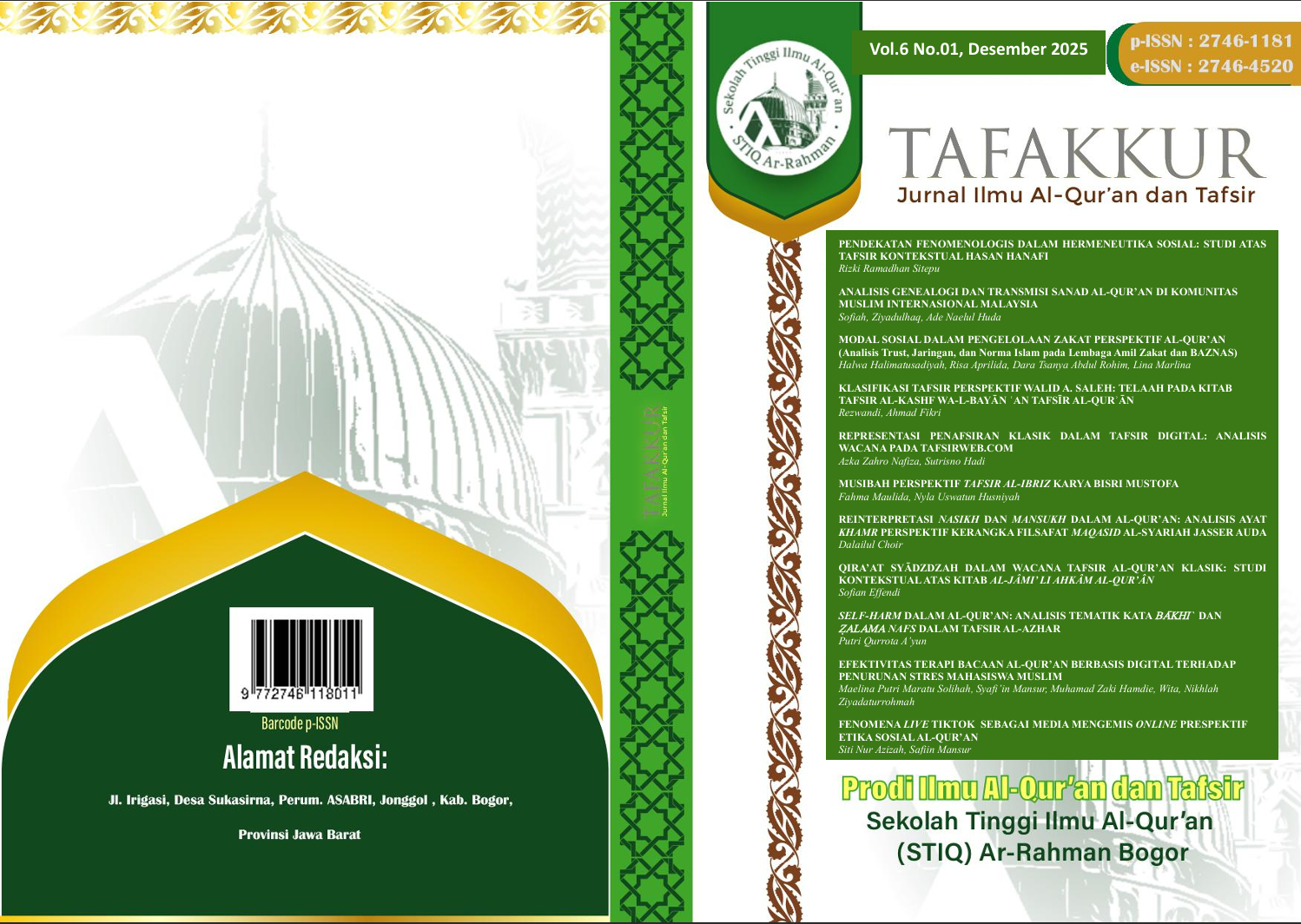
FENOMENA LIVE TIKTOK SEBAGAI MEDIA MENGEMIS ONLINE PERSPEKTIF ETIKA SOSIAL AL-QUR’AN
DOI:
https://doi.org/10.62359/tafakkur.v6i01.869Keywords:
Live TikTok, Online Begging, Social Ethics Quran, Al-Qur'anAbstract
The phenomenon of live streaming on TikTok has given rise to a new practice called online begging or cyber begging, where individuals display actions that evoke sympathy in order to receive digital gifts from viewers. This study aims to analyze this phenomenon through the perspective of social ethics in the Qur’an, particularly the values of iffah (maintaining one’s dignity), ‘adl (justice), ihsan (kindness), and ta‘awun (mutual assistance). The study employs a descriptive qualitative method with a Qur’anic social ethics approach, using digital observation and semi-structured interviews with TikTok users, as well as analysis of classical and contemporary interpretations. The results of the study indicate that the practice of online begging represents a form of moral degradation caused by the shift in social values from honor and hard work towards fame and material gain. This phenomenon contradicts the principles of maqāṣid al-sharī‘ah, particularly in safeguarding human dignity (ḥifẓ al-‘irḍ) and property (ḥifẓ al-māl). The Qur’an emphasizes that humans should not turn suffering into a form of entertainment, as warned in Q.S. Al-Ḥadīd [57]:20 concerning the delusions of the world (ghurūr ad-dunyā). Therefore, this study highlights the importance of applying Qur’anic social ethics in the digital space to foster moral awareness, social solidarity, and the dignified use of technology.
Downloads
References
Abdullahi Maidugu, U., & Abubakar Sadeeq, A. A. (2024). Islam and Morality: The Teachings of Al-Ihsan from the Qur’an and Hadith and its Effects on Muslim Ummah. Solo Universal Journal of Islamic Education and Multiculturalism, 2(03), 181–194. https://doi.org/10.61455/sujiem.v2i03.199
Ada, F. U., Universitas, H., Kiai, N., Saifuddin, H., Memenuhi, U., Satu, S., Mem, G., & Agama, G. S. (n.d.). Konsep h dalam al-qur an perspekt f tafs r skr ps.
Albahri, A., Pasiska, P., & Kurniati, A. (2023). Prinsip Tolong-Menolong Dalam Islam (Eksplorasi Dalam Ayat Al-Qur’an, Sirah Nabiyah Dan Piagam Madinah). ’El-Ghiroh, 21(2), 145–163. https://doi.org/10.37092/el-ghiroh.v21i2.613
Anggraini, N. (2024). Etika Komunikasi Bagi Pengguna Media Sosial Menurut Al-Qur’an. Journal of Comprehensive Islamic Studies, 2(2), 1–9. https://journal.centrism.or.id/index.php/jocis/article/view/242%0Ahttps://journal.centrism.or.id/index.php/jocis/article/download/242/132
Arifah, Rahayu Rahmadini, & Sumanti. (2025). Pengaruh Algoritma Media Sosial terhadap Pola Konsumsi Informasi Jurnalis di Bangka Belitung dalam Perspektif Etika Jurnalistik. Jurnal Komputer, Informasi Dan Teknologi, 5(1), 8. https://doi.org/10.53697/jkomitek.v5i1.2527
Azizah, D. N., & Hidayat, M. (2025). Praktik Cyber Begging dalam Perspektif Surah Al-Baqarah Ayat 273. 6(2).
Desember, V. N., & Taufiq, M. (2024). PENGARUH DIGITAL CULTURE TERHADAP ALQURAN. 4(3), 653–662.
Fajri, P. C. (2022). Pendekatan Maqashid Al-Syari’ah sebagai Pisau Analisis dalam Penelitian Hukum Islam. Jurnal Penelitian Agama, 23(2), 247–262. https://doi.org/10.24090/jpa.v23i2.2022.pp247-262
Fatmawiyanti, J. (2018). Telaah kreativitas. Universitas Airlangga, October, 0–21. https://www.researchgate.net/publication/328217424_TELAAH_KREATIVITAS
Fauzi, M., Arifin, M. S., & Umam, H. (2022). Fenomena Mandi Lumpur Live TikTok Dalam Perspektif Islam. Al-Ibrah : Jurnal Pendidikan Dan Keilmuan Islam, 7(2), 110–129. https://doi.org/10.61815/alibrah.v7i2.209
Indonesia, J. F., Angga, S., Poa, A. A., Rikardus, F., Magister, P., Keilahian, F., Tinggi, S., Teologi, F., & Sasana, W. (2023). Etika Komunikasi Netizen Indonesia di Media Sosial sebagai Ruang Demokrasi dalam Telaah Ruang Publik Jurgen Habermas. 6(3), 384–393.
Irfan, R., & Masyhuri, M. (2025). Interaksi Sosial dan Era Digital : Perubahan Sosial Masyarakat Indonesia Modern. Journal of Education Technology Information Social Sciences and Health, 4(1), 698–703. https://doi.org/10.57235/jetish.v4i1.4963
Isnawan, F. (2023). Fenomena Mengemis Secara Online di Media Sosial dalam Tinjauan Hukum Islam. BUSTANUL FUQAHA: Jurnal Bidang Hukum Islam, 4(1), 40–53. https://doi.org/10.36701/bustanul.v4i1.871
Jurnal Asy-Syukriyyah. (2025). 26, 169–184.
Kamri, A., & Fairuz Ramlan, S. (2015). the Application of Ḥabl Min Allāh and Ḥabl Min Al-Nās Elements in Islamic Code of Ethics: an Exploratory Case Study. International Journal of Economics, Management and Accounting International Journal of Economics Management and Accounting, 23(1), 57–78.
Limbong, E. G., & Putra, R. S. (2023). Strategi Komunikasi Di Era Revolusi Digital (Kajian Fenomena Pengemis Online Media Sosial TikTok). GANDIWA Jurnal Komunikasi, 3(1), 44–51. https://doi.org/10.30998/g.v3i1.1916
Mahmudulhassan, M., Abuzar, M., Khondoker, S. U. A., & Khanom, J. (2025). The Dignity of Labor in Islam: Ethical Principles and Contemporary Relevance. Suhuf, 37(1), 47–57. https://doi.org/10.23917/suhuf.v37i1.10193
Malik, D. M. M. (2021). Ihsanas Islamic Ethical Virtue For Neighborhood Community Coexistence. Addaiyan Journal of Arts, Humanities and Social Sciences, 9(12), 14–22. https://doi.org/10.36099/ajahss.3.12.3
Marina, N., Aziz, A., & Ahmad, F. A. (2019). The Islamic Moral Responsibility And Sustainable Social Engagement In Islamic Institutions. International Journal of Islamic Economics and Finance Research, 2(2), 2636–9419.
Nasrullah Kartika MR, G., & Noor, H. (2014). Konsep Maqashid al-Syari’ah dalam Menentukan Hukum Islam (Perspektif Al-Syatibi dan Jasser Auda). Al Iqtishadiyah Jurnal Ekonomi Syariah Dan Hukum Ekonomi Syariah, 1(1), 50. https://doi.org/10.31602/iqt.v1i1.136
Nur, A., Sukmaningtyas, I., Nurrohim, A., Jundy, A. M., Lovely, T., & Haqq, M. S. (2024). Etika Komunikasi Al-Qur ’ an dan Relevansinya dengan Komunikasi di Zaman Modern. 4.
Nur Syafika, Nur Riswandy Marsuki, & Irsan Irsan. (2025). Masyarakat Digital dalam Lensa Sosiologi: Dinamika, Tantangan, dan Peluang. Merkurius : Jurnal Riset Sistem Informasi Dan Teknik Informatika, 3(1), 132–141. https://doi.org/10.61132/merkurius.v3i1.609
Nuraini, Nasrulloh, Latifah, H., Qurrota Ayuni, R., & Kastrawi, P. (2024). Moralitas di Dunia Maya: Hukum Mengemis Online Live Tik Tok dalam Perspektif Al-Ghazali. Jurisprudensi: Jurnal Ilmu Syariah, Perundang-Undangan Dan Ekonomi Islam, 16(1), 64–82. https://doi.org/10.32505/jurisprudensi.v16i1.7577
Oktavianingtyas, I., Seran, A., & Sigit, R. R. (2021). Jean Baudrillard dan Pokok Pemikirannya. Propaganda, 1(2), 113–121. https://doi.org/10.37010/prop.v1i2.258
Oleh, D., & Fakhruddin, F. M. (n.d.). Teori-teori etika.
Pratama, D. W., Hasanah, U., & Nadhiran, H. (2025). Studi Kritis Terhadap Praktik E-Begging Dalam TikTok Live Menurut Pemahaman Hadis Dan Prinsip Etika Sosial. Al-Bayan: Jurnal Ilmu Al-Qur’an Dan Hadist, 8(2), 1–17. https://doi.org/10.35132/albayan.v8i2.1252
Sukmadinata, N. S. (2017). Metode Penelitian Pendidikan, Cet.12 . Bandung: Remaja Rosdakarya. Akademika, 10(02), 425–436.
Wulansari, E. T. (2024). Tinjauan Hukum Islam Terhadap Fenomena Mendapatkan Gift Pada Live Streaming Aplikasi TikTok. 1–106.
Zahraini, S., Alvianto, R. D., & Putri, M. D. (2023). Fenomena Mengemis Di Jejaring Media Sosial Dalam Perspektif Al-Qur’an. Mafatih, 3(1), 158–170. https://doi.org/10.24260/mafatih.v3i1.1820
Downloads
Published
How to Cite
Issue
Section
License
Copyright (c) 2025 Siti Nur Azizah, Safiin Mansur

This work is licensed under a Creative Commons Attribution-ShareAlike 4.0 International License.
This work is licensed under a Creative Commons Attribution-ShareAlike 4.0 International License.